Gianluca Benincasa’s journey didn’t begin with Uber. It began with a spark.
Originally from Salerno, Italy, Gianluca studied abroad in Spain through Erasmus, then moved to the UK to work at American Express before earning his master’s at the University of Sussex. There, he studied under Professor Veronica Wong, co-author of “Principle of Marketing”, considered the “bible of marketing.” He describes her mentorship as a unique and formative experience.
A spark of inspiration
But the real turning point happened in the most unexpected of places: an airport. Walking past a display of Absolut Vodka bottles while traveling, he felt something shift:
“I was struck by the bottle’s iconic silhouette: simple, transparent, and bold. In that moment, I realized that a product’s shape alone could tell a story.”

That spark led him to an internship at Absolut Vodka in Italy and later moved to Spain to lead the launch of Seagram´s Gin. He continued to build his portfolio as Sr. Brand Manager for Jameson and Ballantine’s. Seven and a half years ago, he joined Uber. After moving across different roles within the company, today he leads Uber and Uber Eats marketing across Southern Europe.
Across Italy, Spain, and the UK, Gianluca has repeatedly followed that spark, showing that today’s most impactful marketers aren’t simply writers or designers. They’re also builders, anthropologists, product thinkers, and cultural translators.
And the journey at Uber offers impactful insights for young professionals when it comes to building products and campaigns people genuinely love.
The bottom line? Great marketing begins with understanding why people love something.
Here’s the key takeaways from Gianluca’s journey that are pivotal for aspiring marketers.
1. Marketing starts with understanding people
Central to Gianluca’s philosophy is curiosity: carefully watching people, listening to what they value, noticing how they behave. Rather than pushing products, marketing at its best begins with empathy.
At Uber, the mission isn’t just to sell rides or meals. It’s about reimagining how people move, connect, and live. Successfully doing that starts by asking the right questions:
- What real problem are we solving?
- What does mobility or a delivered meal represent to someone’s life: freedom, convenience, comfort, independence?
- How does culture shape what convenience or access means in different places?

In Spain, Uber works with thousands of taxis, reframing the typical narrative from competition to coexistence. It’s about offering broader options; a message rooted in respect and collaboration rather than disruption and competition.

Features like train bookings, multi-stop rides, and multimodal integration show that mobility can be more than a ride but rather a cohesive, tailored experience.
Because real connection, and real loyalty, arises when marketing responds to what people really need, not trends.
Because when you ground your strategy in real human needs, you don’t just earn customers. You earn lasting trust by creating solutions people don’t just use, but rely on.
2. Cultural intelligence: The new creative superpower
Operating globally but succeeding locally demands deep cultural sensitivity. A perfect example: the 2025 campaign for Uber Eats in Spain, featuring Antonio Banderas, released under the slogan “Pide casi casi de todo.” In the ad, Banderas innocently orders “a Goya,” only to receive an actual Goya painting—triggering a comically disastrous chain of events.
The humor is rooted in Spain’s cultural memory and familiarity with the works of Francisco de Goya, like El perro semihundido or El 3 de mayo.
The campaign works because it:
- taps into Spanish cultural identity;
- plays with a fun exaggeration of “you can order almost anything”;
- reframes Uber Eats as more than just food delivery but as a gateway to the unexpected;
- uses a beloved, emotionally resonant figure to connect with audiences.
Here, we can see how success came from careful and creative local storytelling, cultural insight, and long-term strategic thinking.
For young marketers hoping to stand out: your job isn’t just to make a “cool ad.” It’s about deeply understanding a place, a community, a moment; then, building something that particular audience could love.
3. Values + purpose = marketing with impact
For Uber, brand building and values are inseparable. Two guiding principles that Gianluca identifies with most closely are:

- “Do the right thing.” Every feature, partnership, and campaign must be evaluated not just for business metrics but for community impact, integrity, and long-term trust.
- “Go get it.” Uber prides itself on being innovative, action-oriented, and agile. Teams are lean, decisions are bold, and execution matters as much as strategy.
Translation? Success isn’t passive. Great work demands resilience, curiosity, and the willingness to go the extra mile.
4. Innovation is a process, not a flash of genius
Everyone loves the myth of the “lightbulb moment.” At Uber, however, innovation follows more of a disciplined process: insight → iteration → execution.
First, it begins with a clear business need. A creative brief typically starts from a real challenge; for example, making mobility more inclusive or launching a new service. From there, teams:
- Collect data and cultural insights;
- Test messaging, visuals, and tone;
- Align everything with values;
- Localize campaigns for dozens of markets;
Iterate on repeat.
Before a campaign launch, ideas undergo months of refinement. Thanks to new AI tools, this process is only becoming more dynamic, allowing teams to test and explore in days what used to take weeks.
The lesson? Creativity isn’t random or accidental. It’s structured. It’s methodical. And with discipline, it can scale and create innovative results.

The big message: build experiences, not ads
The journey of Uber shows that innovation isn’t hypothetical. It isn’t the result of a fleeting flash of inspiration. It’s a discipline grounded in humanity, culture, and purpose. So, as a future professional in marketing, if you want to build products or campaigns people truly love, you need to:
- Understand people deeply;
- Think like a product designer;
- Combine culture + creativity + data;
- Create messages that people connect with, not just hear;
- Act with integrity and purpose;
- Execute with discipline;
- Keep learning. Always.
When you combine emotion, cultural intelligence, innovation, and long-term thinking, like Gianluca’s professional journey showcases, you don’t just build a product campaign. You build something people love.

Impactful insights for future marketers
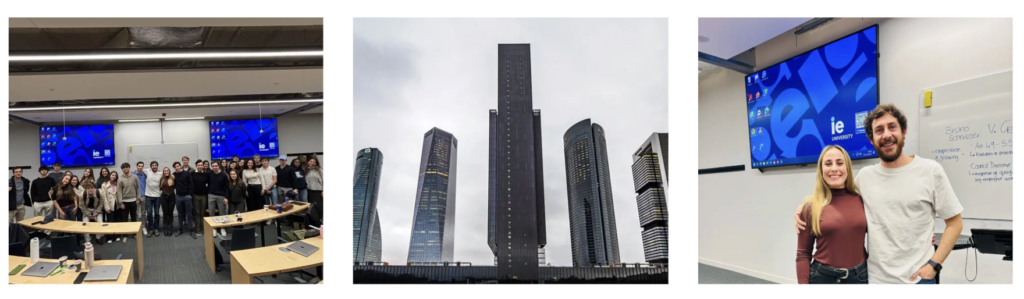
This story was shared during a session of the Marketing Fundamentals course by IE Adjunct Professor Paula Civale, (MBA) and founder of Civale Consulting. The interactive workshop gave students from the Bachelor in Business Administration & Bachelor of Laws a firsthand look at how global experience, deep product curiosity, and exposure to world-class brands shape modern marketing philosophy.
If the thinking behind global companies inspires you, the Bachelor in Business Administration offers the strategic training, real-world projects, and global perspective to help you shape the future of business. Learn more here.